Blog · Food innovation
Why Carob Deserves a Place in Food Innovation
A biscuit, a plant-based drink and a snack bar can each give carob a different role. For food manufacturers looking beyond familiar ingredients, now is a useful time to put this Mediterranean crop on the development agenda.
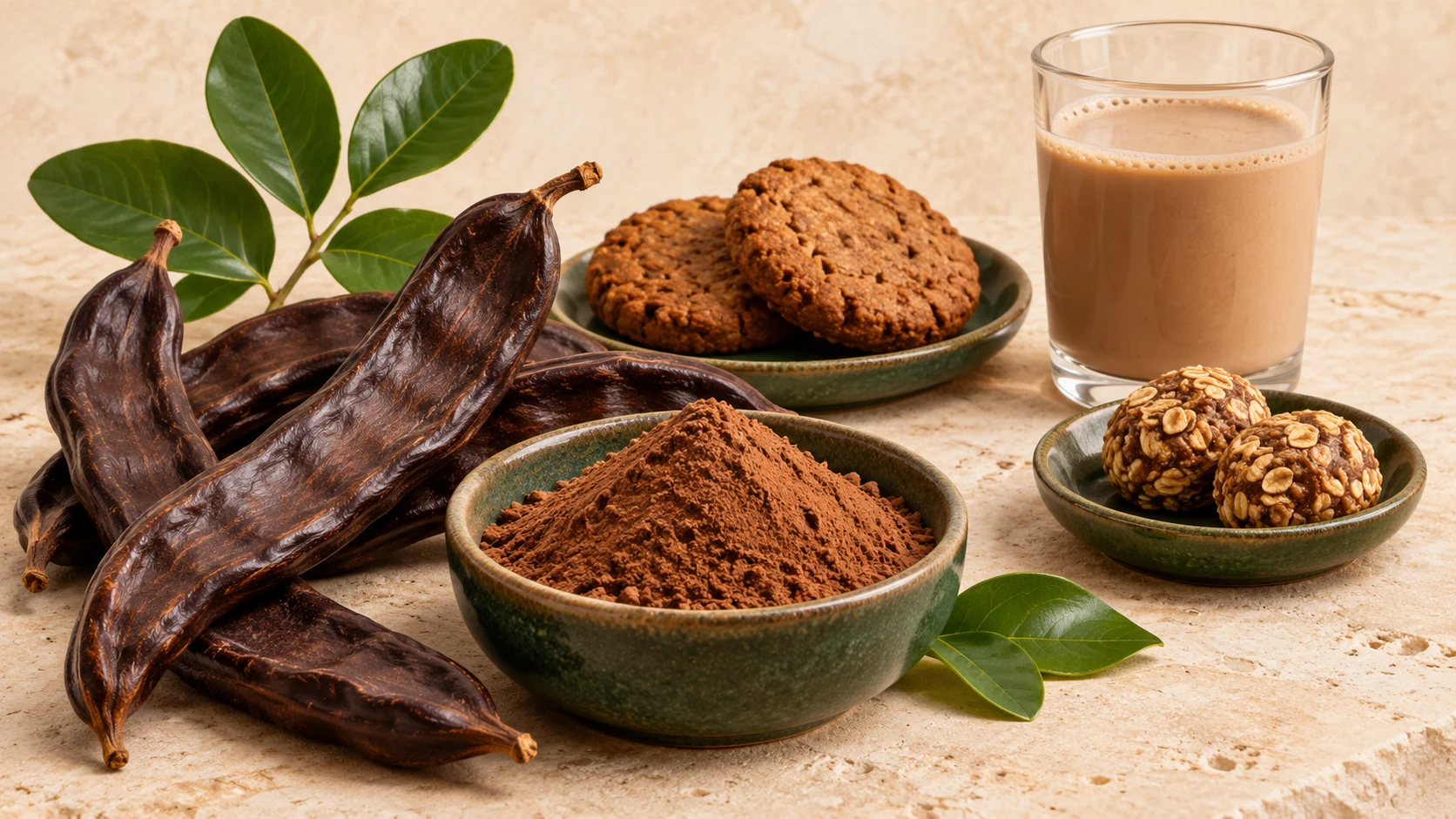
Three food industry trends worth watching
Carob ingredient innovation sits at the intersection of cocoa alternatives, plant-based formulation and the search for appealing everyday foods. Recent ingredient launches and development priorities give manufacturers concrete reasons to revisit what carob could do in their own range.
Cocoa alternatives are attracting new development. On 27 October 2026, Planet A Foods announced Cocoa Booster, an ingredient designed for cocoa-powder replacement. The launch illustrates activity in this category; its performance claims belong to that company's product.
Plant proteins are also evolving. Lantmännen describes NordPea as a pea-protein ingredient in final testing, with commercial availability expected in the second quarter of 2027. For a beverage developer, the opportunity is to consider the flavour system alongside the protein source.
Taste and texture remain central to nutrition-led products. In its work on GLP-1 consumer trends, IFF discusses the challenge of making smaller, nutrient-focused formats enjoyable. This is a formulation brief, rather than evidence of a health benefit from carob.
Our view at Carob Orchards is that these developments create a good reason to test carob across several product concepts. A useful first project asks a specific question: can a selected powder profile deliver the flavour, colour or product identity the brief needs?
Start with the right carob ingredient
The carob discussed here is Ceratonia siliqua, the Mediterranean carob tree. Our food powders use the pod pulp. Raw and roasted profiles give the developer a choice of starting points, which should be compared in the actual recipe.
Carob powder and locust bean gum are different ingredients. The UK Food Standards Agency's E410 entry identifies locust bean gum as material made primarily from the seed endosperm. A pulp powder should not be substituted for a seed-derived gum on the assumption that both perform the same job.
Define the ingredient by plant species, part of the pod, processing and specification. This is particularly helpful in international sourcing, where similar common names can describe different raw materials.
Three practical projects for your development team
The following are trial proposals, not results from a finished Carob Orchards recipe. Each gives the team a clear question and a basis for deciding what to test next.
1. A distinctive carob biscuit
A roasted profile could create a recognisable carob flavour or contribute to a recipe that also contains cocoa.
What to test. Compare Medium and Dark profiles against the current recipe. Record each ingredient adjustment and assess flavour, colour, dough handling, spread and texture after cooling.
How to decide. Choose the version that meets the sensory brief, then calculate the full recipe cost. Evaluate partial cocoa replacement within that recipe; set the inclusion level through trials.
2. A plant-based carob drink
A selected carob profile could give an oat- or pea-protein drink a flavour identity of its own.
What to test. Screen Raw and Light profiles in the chosen base. Record mixing, heat treatment and storage conditions; compare sweetness, mouthfeel, sediment and flavour over the intended evaluation period.
How to decide. Keep the combination that meets both sensory and stability targets. The powder, plant base and process need to be assessed together.
3. A small-format carob snack
Carob could provide the flavour direction for a cereal bite or bar developed around a defined protein or fibre target.
What to test. Compare two profiles in the same base and assess chew, dryness, sweetness and serving size. Calculate the composition of the complete product using current ingredient data.
How to decide. Select the version people want to eat again. Confirm any nutrition claim from the finished formulation and the requirements of its destination market.
Turn an interesting ingredient into a useful trial
Begin with one product and one primary objective. A team exploring cocoa alternatives may prioritise flavour and formulation cost; a plant-based brand may prioritise mouthfeel and a distinctive new product. Those briefs can lead to different powder choices.
Ask for the product specification, relevant allergen information and batch documentation. Keep a record of the sample, recipe and processing conditions so that a promising result can be repeated. Our raw and roasted profile guide helps frame the initial comparison.
For an economic comparison, include changes to the whole recipe, processing, yield and delivered ingredient cost. A powder's price per kilogram alone cannot establish the cost of the finished food. The same discipline applies to a simpler ingredient list: assess the complete formulation and the wording you can support on its label.
Set the target market before choosing the final flavour and pack message. A product intended for Spain, North America or Latin America may need a different sensory brief and labelling review. One successful bench sample is the starting point for that work.
Common questions
How is carob used in food manufacturing?
Carob powder can be evaluated in bakery, confectionery, beverage and snack formulations for a defined flavour, colour or product-development role. Choose the profile and inclusion level through application trials. Our cocoa-alternative guide explains the questions to address when cocoa is part of the brief.
Is carob powder the same as locust bean gum?
No. The Carob Orchards food powders discussed in this article are made from pod pulp. Locust bean gum comes from the seed endosperm and has a different composition and technological role. Specify which ingredient you need when requesting a sample.
Sources are linked alongside the relevant points. Industry announcements are distinct from our proposed application trials.
Carob Orchards · Valencia, Spain
Bring your next carob idea to Carob Orchards
Carob Orchards supplies Spanish carob powders in Raw, Light, Medium and Dark profiles for food development. Our 75 µm programme gives formulation teams a focused range to compare for bakery, confectionery, beverages and snacks. Select the profile around your product and confirm the specification for the sample and batch.
We are also developing our own agricultural base. Carob Orchards has its own planted carob orchard, with its first harvest expected in 2027. Alongside our current powder offer, this is a concrete step in our long-term commitment to the crop.
If carob belongs in your next product brief, start the conversation now. Tell us what you are developing, the flavour or formulation objective and the destination market. We can discuss a suitable profile and a technical sample for your trials.
Request a technical sample