Blog · Carob basics
What Is Carob Powder? From Pod to Kitchen
Carob powder is made by milling the pulp of the pods of Ceratonia siliqua, the Mediterranean carob tree. It brings its own flavour to drinks, baking and desserts. Start by choosing the right ingredient, then explore one simple use.
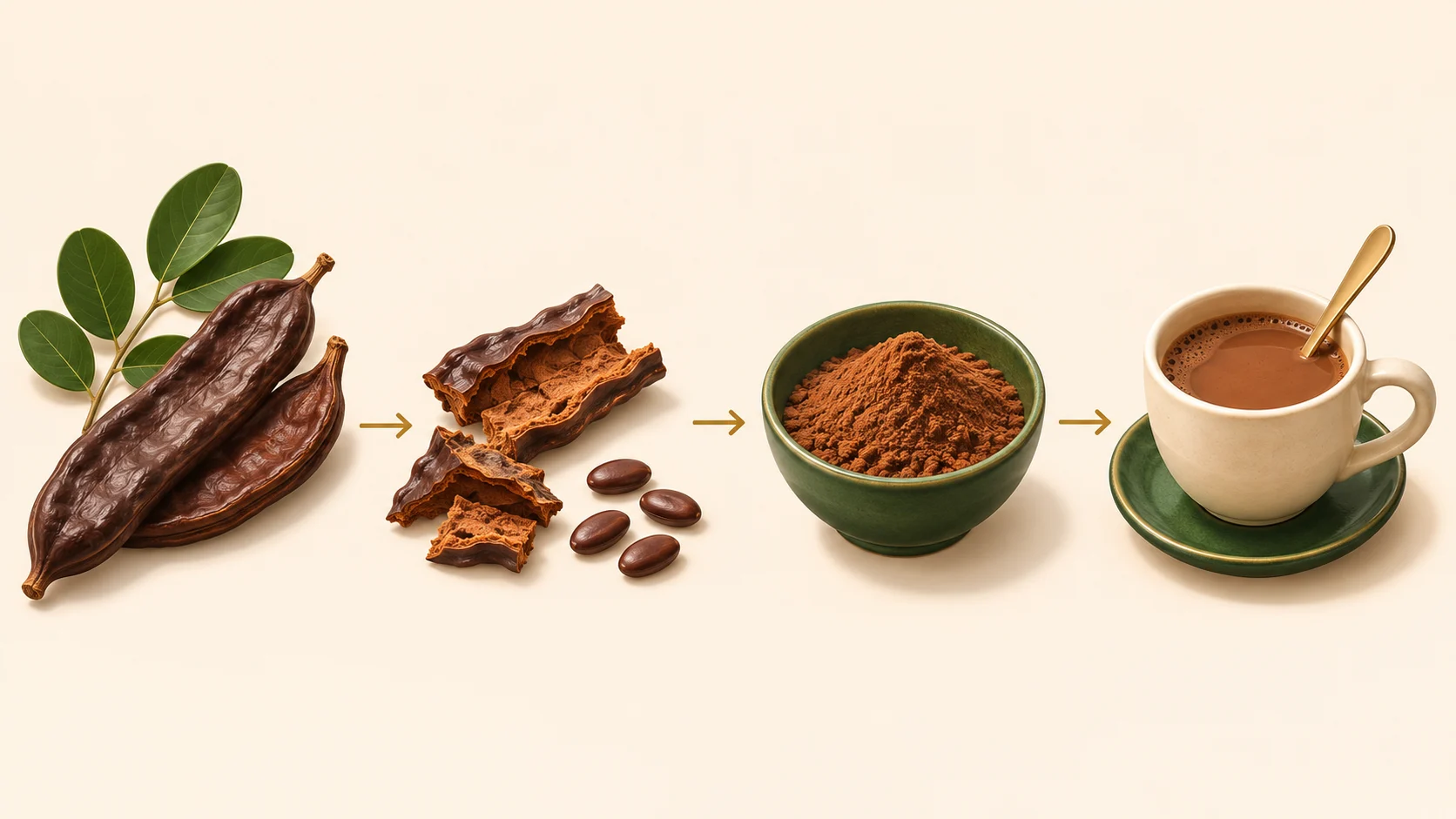
A Mediterranean pod, with two different ingredients inside
Kew identifies Ceratonia siliqua as an accepted species whose native range extends from the Mediterranean to Iran. The long pods contain pulp surrounding hard seeds. For the food powders described here, it is the pulp that matters.
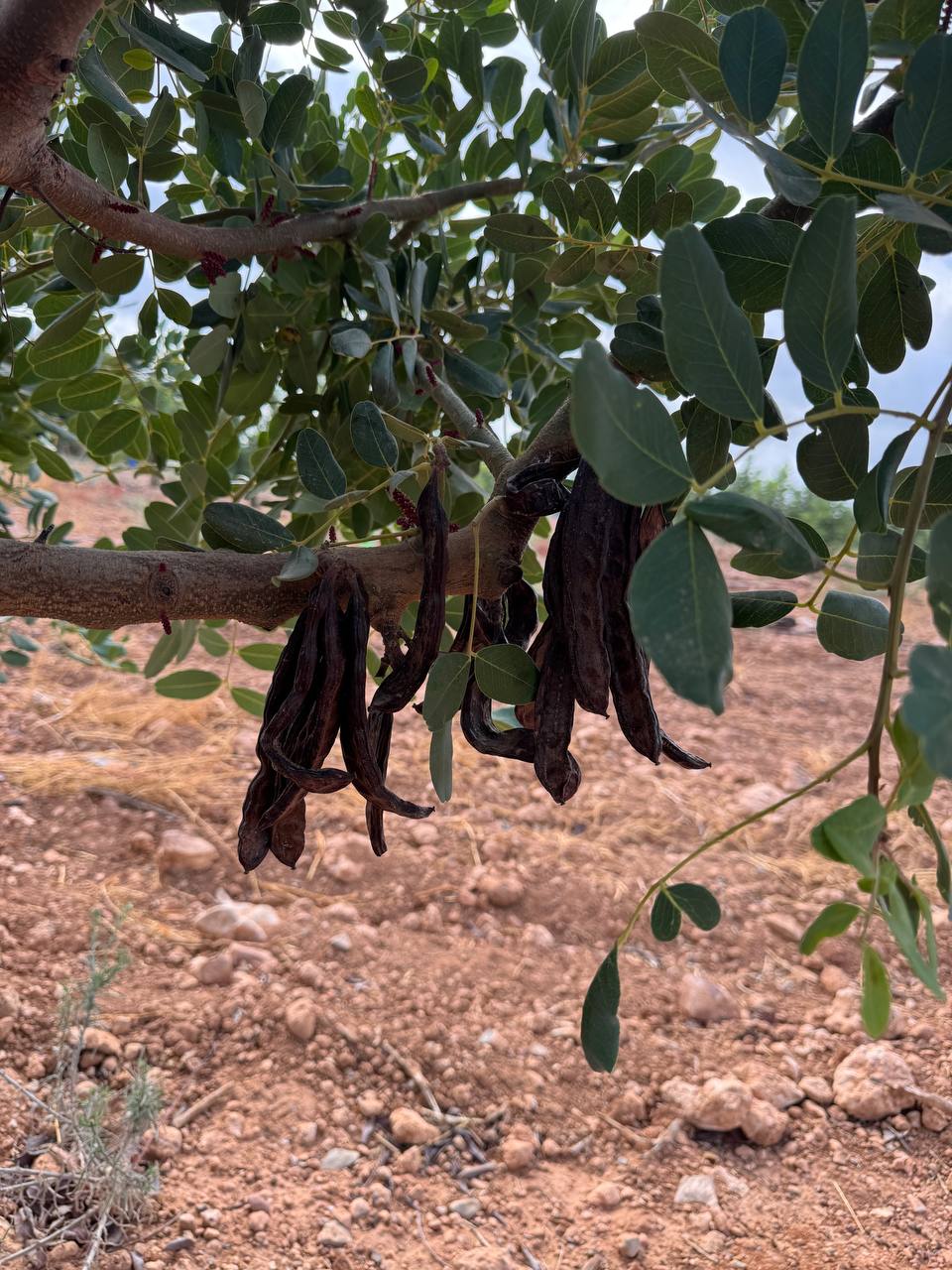
The photo below shows what carob pods look like on the branch. Recognising the plant helps connect a brown powder in the kitchen with the crop it comes from.
Names need a little care when shopping internationally. In parts of Latin America, algarroba also refers to ingredients from other trees. Argentina’s food information sheet distinguishes Mediterranean Ceratonia siliqua from the Prosopis species used locally. Check the botanical name when you want the Mediterranean ingredient.
From pod to powder: follow the pulp
The useful distinction is between the seed and the surrounding pulp. The pulp is prepared for milling, and roasted powders include a roasting treatment. The order and conditions of processing depend on the product; the illustration is an overview, not a set of home-processing instructions.
In the illustration, follow the pods to the separated pulp and seeds, then to the powder. The cup shows one possible use of the powder. It does not mean that powder is an instant drink mix or that every product is prepared in the same way.
Powder, syrup and gum: what is the difference?
These names describe different ingredients. Research on carob syrup describes extracting soluble material from the pulp with water and concentrating the liquid. FAO/JECFA’s description of locust bean gum identifies the seed endosperm as its source and lists thickening and stabilising uses.
| Ingredient | What you are choosing |
|---|---|
| Carob powder / carob flour | Milled pod pulp. Choose it when you want to explore carob flavour in a drink, a bake or a dessert. Check whether it is pure powder or a blend. |
| Carob syrup | A concentrated liquid extract of the pulp. Its liquid form has a different role in a recipe from a dry powder. |
| Locust bean gum / E410 | An ingredient from the seed endosperm, used mainly to manage texture. It is not the brown pulp powder used for carob flavour. |
What does carob powder taste like?
Carob can have sweet, caramel-like and roasted notes. A sensory study of carob powder found that roasting conditions changed aroma, taste and colour, with more intense treatments bringing different roasted or coffee-like notes. That is a reason to compare profiles, not to assume that the darkest powder will be your favourite.
Carob Orchards offers Raw, Light, Medium and Dark profiles. Those are choices within our range, not a universal grading scale for every supplier. Our raw and roasted powder guide explains how to frame the comparison.
Try a profile in the food or drink you actually want to make. Milk, a plant-based drink and a biscuit recipe each create a different setting for the flavour. Record which profile you used so you can find it again.
A first warm drink: keep the comparison simple
Choose a food-grade carob powder intended for drinks, and follow its serving and preparation instructions, including any required heating. A roasted profile is one starting point to explore. Keep the first cup simple so you can notice what the carob contributes.
Choose one base
Use a milk or plant-based drink you already enjoy. Use the same base when comparing two carob profiles.
Mix a smooth paste
Combine the labelled amount of powder with a small portion of the liquid first, breaking up visible lumps.
Prepare and stir
Add the remaining liquid gradually while stirring, and follow the product’s preparation and heating directions. Treat the powder as an ingredient to mix through the drink rather than assuming it behaves like an instant mix.
Taste, then adjust
Assess aroma, sweetness and texture before adding other flavours. For the next cup, change one thing at a time: the powder profile, the amount or the base.
Prefer baking or dessert? Start with a suitable recipe
A biscuit or a baked dessert can be another useful first introduction. Pick a recipe developed for carob and follow it before making your own changes. Calling the powder “flour” does not mean it performs the same job as wheat flour.
If the starting recipe contains cocoa, use a version designed for carob or make a small, recorded trial. The best starting question is what flavour you want, rather than whether the finished result will be identical to chocolate.
Before choosing a product, check the ingredient list, the intended preparation, the roast profile and the storage directions. For home use, also check the available pack size and sales channel in your country.
Common questions
Are carob powder and carob flour the same thing?
For Mediterranean pulp products, the two names are often used for the same type of milled ingredient. Check Ceratonia siliqua, the part of the pod used and the ingredient list; similar names can refer to different products.
Does carob taste exactly like cocoa?
Carob has its own flavour. Roast profile and the recipe affect the result, so choose it for the flavour you enjoy and compare it in the intended food or drink.
How should I use carob powder for the first time?
Choose one simple use and follow the product instructions or a recipe developed for carob. A warm drink lets you compare profiles in a familiar base; a small bake is another starting point.
Botanical and ingredient sources are linked beside the relevant explanations. The kitchen steps are a suggested way to explore a product; no Carob Orchards recipe test or tasting result is claimed.
Carob Orchards · Valencia, Spain
Find your starting point with Carob Orchards
Carob Orchards supplies Spanish carob powders in Raw, Light, Medium and Dark profiles. If you are discovering carob for home use, tell us what you would like to make and where you are based. We can discuss a suitable profile and clarify product availability, pack sizes and the sales channel for your market.
Our connection with the crop is also growing through our own planted orchard, whose first harvest is expected in 2027. It is part of our long-term work with carob, alongside our current powder offer.
Start with one idea: a cup, a biscuit or a dessert. Ask us which Carob Orchards option is available for that first experiment.
Ask about availability