Blog · Kitchen guide
Carob vs Cocoa: What Changes in Your Kitchen?
Roasted carob usually brings a rounder sweetness and toasted notes, while unsweetened cocoa gives a more recognisable chocolate aroma and a bitter edge. Both can give a drink or a bake a rich brown colour. The difference is easiest to notice when you taste them side by side.
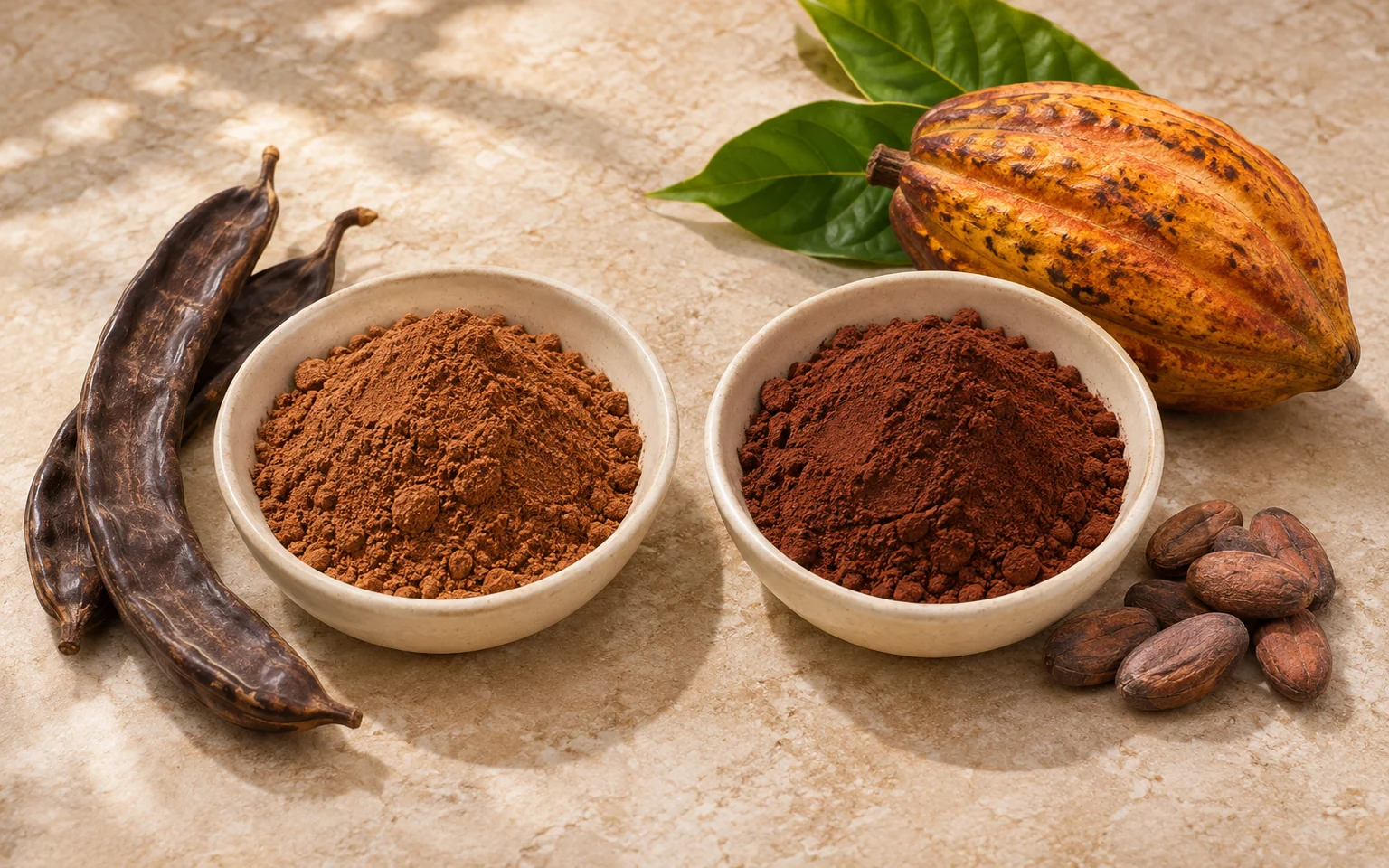
How carob and cocoa taste
Roasted carob powder comes from the pulp of the carob pod. Cocoa powder comes from cacao beans. The two may look similar in a spoon, but carob has sugars of its own and roasting can bring out caramel or more pronounced toasted notes. Natural and alkalised cocoa also taste different from each other, so start by checking what is on the label.
In a published comparison of two muffin batches, tasters found the carob muffins sweeter and less bitter than the cocoa muffins. The crusts looked similar to consumers, even though the crumb colour differed. The researchers used a specific batter with soybeans, sesame oil and flaxseed, so the findings describe that recipe.
| In the kitchen | Roasted carob powder | Unsweetened cocoa powder |
|---|---|---|
| Flavour | Mild sweetness, with caramel or toasted notes depending on the roast | Distinct chocolate aroma, usually with more bitterness |
| Drinks | Start without a sweetener and taste before adding any | Taste for the chocolate intensity and bitterness you want |
| Baking | Try a small partial swap and check flavour, crumb and rise | Use the cocoa type specified in the original recipe as your reference |
Try the two-cup comparison
A warm drink lets you taste the two powders without vanilla, chocolate pieces or toppings competing for attention. Here is a simple comparison to try with the powders you have at home.

Use the same base
Measure 150 ml of the same warm milk or unsweetened plant drink into each cup. Use 5 g of plain roasted carob in one and 5 g of unsweetened cocoa in the other as a starting point.
Mix each powder the same way
Make a paste with a little of the liquid in each cup, then whisk in the rest. Stir again just before sipping and taste both at the same temperature.
Taste before sweetening
Compare the aroma first. Then notice sweetness, bitterness and the finish. If you want to sweeten either cup, do it after the first tasting so you can tell what the powder contributes.
Start with a small swap in baking
For a familiar muffin or cookie recipe, bake a small batch as written and a second with some of the cocoa replaced with carob by weight. Keep the other ingredients and baking time the same on the first round. Once both have cooled, compare the crumb, the rise and how sweet each tastes. Change one thing at a time in the next batch.
If your recipe specifies natural cocoa and relies on baking soda, keep some of that cocoa in your first trial. Changing the acidity can affect the rise. You can also blend carob with cocoa if you want to retain some of the chocolate aroma while bringing in the roasted flavour of carob.
Common questions
Can I replace cocoa with carob one for one?
Equal weights are a practical starting point for comparing two drinks. In baking, start by replacing part of the cocoa, then adjust after tasting and checking the texture. The recipe and the roast both matter.
Does unsweetened carob powder contain sugar?
Plain carob powder contains the sugars naturally present in the pod. Check the ingredients list for added sweeteners and the nutrition panel for total sugars, especially if you are buying a drink mix.
The muffin comparison is from published sensory research. The two-cup method is a tasting suggestion for your own kitchen.
Carob Orchards · Valencia, Spain
Choose a roast for what you want to make
The flavour you want in a cup may differ from what works in a cookie. At Carob Orchards in Valencia, our Spanish carob powders come in raw, light, medium and dark profiles. Start with light for a caramel direction or medium for a rounder cocoa-like profile. Dark is another option when you want deeper colour and a more pronounced roasted note.
Explore our Spanish carob powder profiles