Blog · Dogs & carob
The Last Piece
The rustle of a wrapper. A patient dog. An owner who wants to share. A little heart-shaped carob treat opens a new possibility.
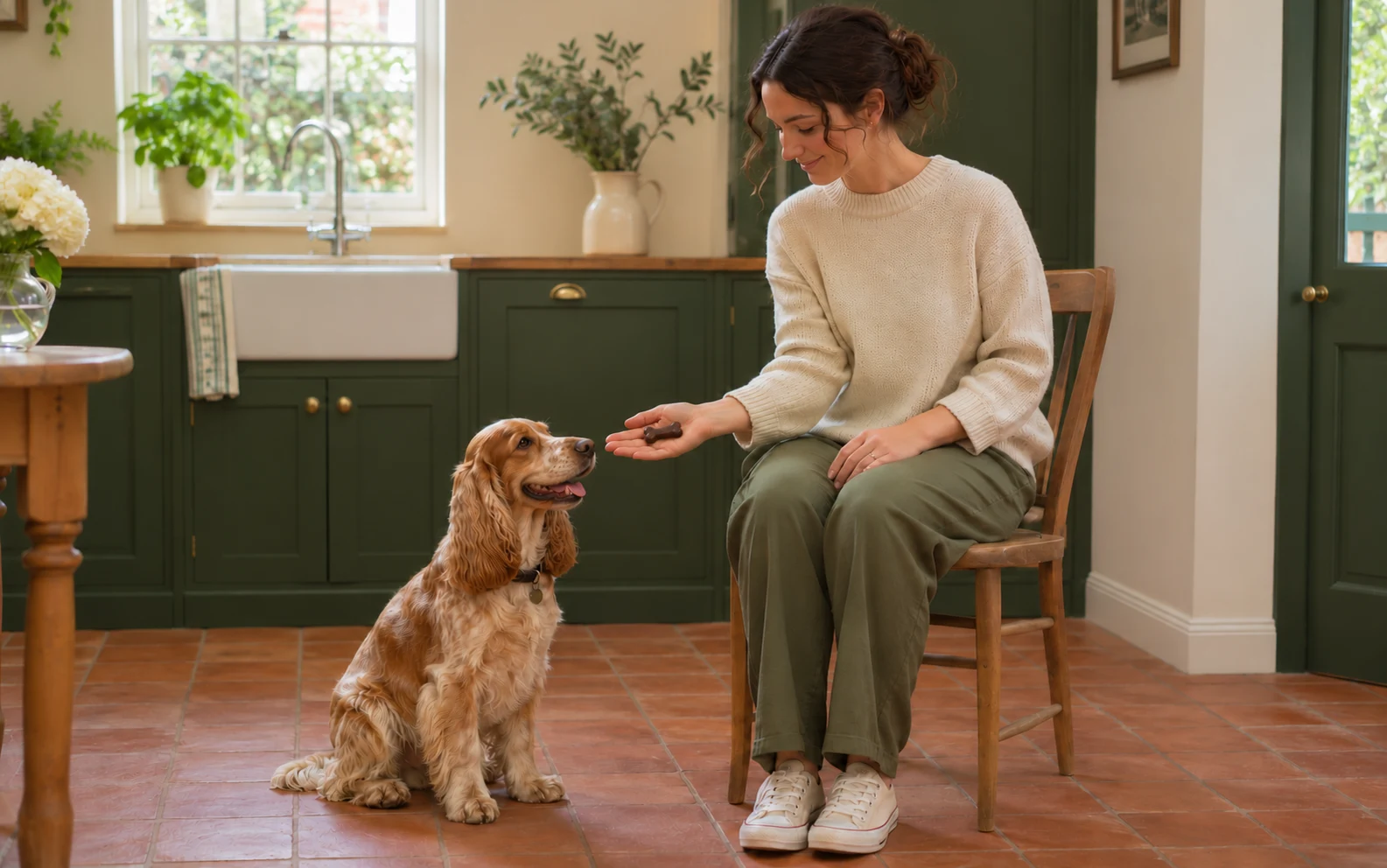
The sound of a wrapper
Picture Anna in her kitchen, with Bruno just out of sight in the hallway. He always knows that sound.
Not the doorbell. Not the turn of a key. The quiet crackle of a wrapper that she tries to muffle with her sleeve. A second later, a nose appears. Then the rest of the dog.
He sits beside her and waits. Anna calls it “the conscience test”.
“You have just had your dinner.”
Bruno tilts his head. He is not convinced.
Seven years together have brought them plenty of little agreements. In the morning, he waits by the door while she looks for her other sock. In the evening, she leaves him a place on the sofa, although she once planned to keep him out of the bedroom altogether. He listens to her stories about work. She pretends not to notice the toy he keeps dropping at her feet.
She wants to share everything with him. Chocolate is one thing she cannot.
Anna knows that and keeps her sweets in a high cupboard. But one afternoon, while they are visiting family, her niece holds out a chocolate to Bruno.
“One for him too. He is part of the family.”
Anna catches her hand in time. The little girl is startled by the sudden movement. Bruno steps back, although he has done nothing wrong. For a few seconds, everyone looks at everyone else. Then the adults all start talking at once.
That evening, Anna keeps thinking about those words: “He is part of the family.”
Of course he is. Under the table during family dinners. In the car on the way to the sea. Beside the bed when she is ill. In every other photograph on her phone. Yet at the table, so often his share is simply “no”.
A box of his own
The first time Anna sees dark, shaped dog treats in a shop window, she stops.
Little hearts sit in a box with a clear lid. Beside them are biscuits with a brown glaze. It looks as though somebody has finally remembered the patient guest under the table.
She reaches for the box, then turns it over to read the ingredients. Carob.
The word is unfamiliar. At home, she finds photographs: long, dark pods among dense green leaves. The Mediterranean carob tree, Ceratonia siliqua. Powder made from its pulp, used in treats that can look rather like chocolate.
Ordinary chocolate contains theobromine and caffeine, which are toxic to dogs. Carob offers a route to developing cocoa-free dog treats with a familiar brown appearance. VCA describes its use as a chocolate substitute in dog treats. A human carob sweet is not automatically suitable for a dog: the complete ingredient list matters.
Anna likes the possibility. Bruno could have his own treat in a beautiful box.
But lately, she has learned to read labels slowly. Bruno has been scratching, and she and his vet are working through his diet. Random treats have had to go. Her walking-coat pocket now holds only what fits his agreed feeding plan.
She photographs the ingredients and discusses them with the vet. When the chosen treat is approved for Bruno’s diet, Anna goes back for the hearts.
The work behind a little heart
Behind those small moments of happiness is the work of developing a recipe. Carob powder becomes a biscuit, a glaze, a little heart for a special occasion — a treat someone wants to give their dog.
At Carob Orchards, we offer Spanish carob powder and a dedicated Pet Food programme for that work. Manufacturers can discuss a suitable profile, request a sample and evaluate it in a cocoa-free dog-treat formulation.
For us, the conversation starts with the finished product. A small crunchy biscuit for a walk. A heart in a gift box. A carob glaze for a dog’s celebration cake. Each format brings its own requirements for colour, fineness, texture and the other ingredients.
Products for dogs with dietary restrictions need particular care. Replacing cocoa with carob does not, by itself, make a treat hypoallergenic. The whole recipe and the individual dog’s response matter. VCA explains why food allergy requires an individual assessment.
On the other side of every formulation will be someone like Anna. They will pick up the box, turn it over and read the label. They will want to understand whether this treat fits their dog’s needs.
The manufacturer works on the recipe. The owner looks forward to a simple moment: opening the packet and saying, “This one is yours.”
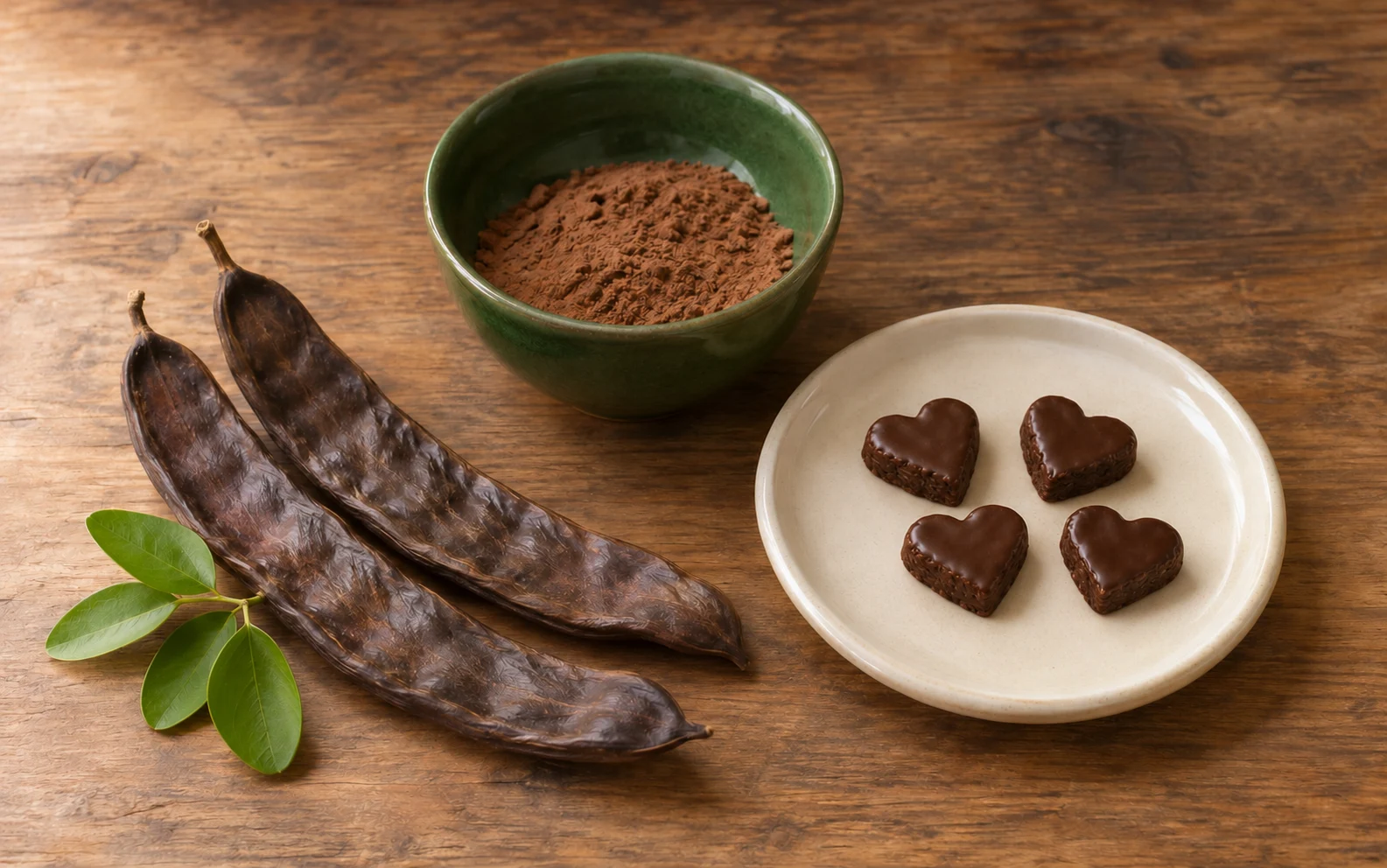
The last piece
And so a beautiful little box of Bruno’s own finds a place in Anna’s kitchen cupboard.
That evening, he comes running at the crackle of a wrapper again. Anna puts away her chocolate, opens the new box and takes out a little dark heart.
“And this is yours.”
Bruno gently takes the treat from her hand. Anna strokes his head, then puts the box on the high shelf, beside her own.
Veterinary sources are linked beside the relevant explanations. The pictured treats are recipe-development concepts, not products sold by Carob Orchards.
Carob Orchards · Valencia, Spain
Every new treat begins with an ingredient
For a manufacturer, a story like this begins with an idea and an ingredient choice. Tell Carob Orchards what you want to create: we can discuss a suitable carob powder, a sample and documents for your development work.
Discuss your pet-food project